
Once Upon a Mix-Up: Sort the Story and Practice Flexible Thinking
A scrambled kingdom story
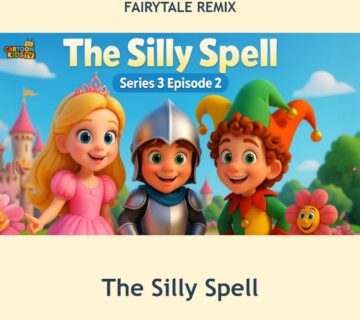
Fairytale Remix Episode 1 follows Princess Poppy, Knight Neddy, and Jester Joey after a mischievous spell scrambles their kingdom. The description highlights creative problem-solving, friendship, laughter, and the words enchanted and miraculous. Runtime: 3 minutes 52 seconds.
The games below borrow the idea of a mix-up but use new family-made materials. Keep fictional magic clearly separate from real explanations while allowing children to enjoy the pretend world.
Flexible thinking has steps
Flexible thinking does not mean accepting every idea or changing plans without reason. It means noticing new information, considering more than one option, and choosing a next step. A child can keep a goal while changing the route.
Model a calm sequence: name the problem, list two options, test one, and review. When children hear this sequence repeatedly, a failed block tower or misplaced toy becomes a manageable problem rather than a verdict on their ability.
Activity 1: Make a mixed-up story deck
Materials: six index cards, crayons, and a small envelope. Draw simple pictures rather than copying characters or scenes.
- Draw a beginning, a problem, two possible attempts, a helpful action, and an ending on separate cards.
- Shuffle the cards and invite your child to place them in an order that makes sense. Accept more than one order if the child can explain it.
- Tell the story aloud using first, next, then, and finally. Point to each card as it is used.
- Move one card and ask what sentence would need to change. This creates a small, visible mix-up.
- Add the word enchanted or miraculous only when it fits the sentence. Ask the child to explain the word in their own way.
For younger children, use three cards: beginning, problem, ending. Older children can write a different ending and compare which clues support it.
Activity 2: Build a bridge with changing rules
Materials: blocks, cardboard strips, two toy figures, and a timer if useful.
- Set a goal: make a bridge that lets both figures cross without an adult holding it.
- Give children five minutes to plan and build. Pause once to ask what is stable and what is wobbly.
- Introduce one fair rule, such as using one fewer block. Let the team choose what to redesign.
- Test the bridge with the toys, then name one improvement. Avoid racing if speed would hide careful planning.
One child can be the builder and the adult can read the rule card. The point is to explain a change, not to produce a perfect bridge.
Story and thinking prompts
- Which card helped you know what happened first?
- What changed when the rule changed?
- How did a friend make your idea easier to try?
Keep exploring
Read more in the Fairytale Remix collection and visit our problem-solving guide. Keep your story deck for a fresh ending tomorrow.
Activity 3: Draw the episode idea
Materials and setup
Use paper, crayons, and one safe household object connected to Once Upon a Mix-Up. Keep the object on the table and let an adult handle any cutting.
How to play
- Draw the starting situation from the story.
- Circle one detail that helps explain the problem or idea.
- Draw a second version after one change.
- Tell a family member what changed and why.
Parent Prompt: Ask, “What detail would you investigate next?”
Learning Connection: Comparing before and after drawings helps children explain evidence and sequence.
Activity 4: Make a family sorting game
Materials and setup
Prepare six large paper cards with pictures or words related to Once Upon a Mix-Up. Use broad categories that your child can explain.
How to play
- Place the cards face up and invite a first sort.
- Ask your child to name the rule used.
- Change one card or rule and sort again.
- Compare which rule was easier to explain.
Parent Prompt: Ask, “Could another rule also work?”
Learning Connection: Flexible sorting builds classification and clear communication.
Activity 5: Retell, question, and check
Materials and setup
Use three paper panels labelled Before, During, and After. Keep a question card beside them.
How to play
- Retell one episode moment in the first panel.
- Draw what happened next and add one question.
- Look for an answer in the article or an official source linked below.
- Write or dictate what remains uncertain.
Parent Prompt: Ask, “What evidence supports that answer?”
Learning Connection: Retelling and checking sources connect comprehension with early research habits.
Further Reading and Family Links
Explore the Fairytale Remix collection and continue with more Cartoon Kids TV learning guides. For background information, visit Reading Rockets literacy resources and Harvard’s child development resources.
Frequently Asked Questions
What does a mix-up teach besides laughter?
The episode uses a scrambled kingdom to introduce creative problem-solving, teamwork, and friendship. Children can practice those skills by sequencing cards and revising a bridge.
Can a story deck have more than one correct order?
Yes, if the child can explain how the events connect. Asking for evidence supports sequencing without turning imaginative storytelling into one rigid answer.
How do we teach enchanted and miraculous?
Use each word in a short sentence, then ask the child to draw or act it out. Return to ordinary examples so vocabulary is connected to meaning rather than memorized.
What if the bridge collapses repeatedly?
Pause, name one visible problem, and change one feature. Fewer blocks or a wider base can make the next test informative instead of frustrating.
Is the changing rule fair to all children?
Give everyone the same rule and enough time to understand it. Children can choose roles so a builder, planner, and tester each have a meaningful contribution.
How long is Once Upon a Mix-Up?
The source lists 232 seconds, or about 3 minutes 52 seconds. A story deck or bridge game can take ten to twenty minutes depending on the child’s age.
What can children notice in Once Upon a Mix-Up?
Invite children to name one detail from the episode before offering an explanation. Their observation can guide a drawing, map, or small home investigation.
How can this episode become a family activity?
Choose one short extension from the guide, keep materials simple, and let children explain what changed or what they still wonder about.
Is the home activity a scene from the cartoon?
No. It is a separate, supervised learning extension inspired by the episode topic. The article identifies when a model simplifies a real process.
Where can parents find reliable follow-up information?
Use the linked official science, education, or cultural institution sources in the Further Reading section and compare information with your child questions.


No comment