
The Great Beyond: A Parent Guide to the Episode and Its Big Ideas
The edge of a lawn can be more interesting than the middle. A child may notice shaded leaves on one side, sunlit grasses on the other, and a bird moving between them. The Great Beyond offers a useful name for some of these meeting places: an ecotone, where neighboring ecological communities come together.
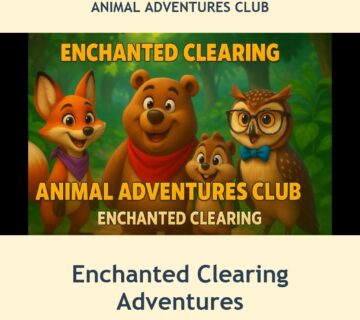
The published episode description follows Benny the Bear, Fiona the Fox, Sammy the Squirrel, and Oliver the Owl beyond their familiar forest into meadows and wetlands. It mentions marsh wrens, herons, simple science tools, and questions about habitat edges. These five home investigations build on those themes. They are original family activities, not a list of additional scenes from the episode.
Explain an Ecotone Without Promising More Wildlife
An ecotone is a transition between ecological communities, such as forest and grassland. Conditions can change across it: light, moisture, shelter, and available food may differ. Some edges support species from neighboring habitats along with species adapted to the transition. That does not mean every edge always has more species, or that cutting intact habitat into small pieces helps wildlife.
Keep two ideas together: natural transitions can be interesting, and habitat fragmentation can harm species that need larger undisturbed areas. The EPA’s wetlands resources explain wetland functions, while the U.S. Fish and Wildlife Service refuge system offers examples of protected habitats. Use these for adult background without expecting a young child to master conservation terminology before taking a careful look.
Activity 1: Draw a Habitat Edge Map
Materials: Paper, crayons, and a safe view of two neighboring spaces, such as a planted bed beside a lawn. A photograph works when outdoor access is unavailable.
What to Notice
Look for where one kind of cover gradually changes into another. A garden border can illustrate changing conditions, although it is not automatically equivalent to a natural forest-wetland ecotone.
How to Play
- Choose a small area an adult can supervise from a safe path. Stay away from road edges, unstable banks, and water.
- Draw two broad regions on paper. Use colors to represent taller plants, shorter plants, bare ground, or other visible cover.
- Mark the transition and add three details you can actually see, such as shade, a flower, or fallen leaves.
- Ask your child to draw a possible animal route between the regions in a different color. Label that route a prediction unless you observed it.
Parent Prompt: “Where does this place start to feel different, and what clue makes you say so?”
The Learning Connection: Children represent space and separate observation from inference. The map begins with visible cover instead of assuming they can identify every plant or animal correctly.
Activity 2: Compare Two Observation Windows
Materials: A notebook, pencil, and a timer operated by an adult. Pick two nearby viewing spots that can be reached safely without entering sensitive habitat.
What to Notice
A fair comparison needs similar observation effort. Watching one place for a minute and another for twenty minutes can make the second seem busier simply because you looked longer.
How to Play
- Choose one spot near a visible transition and another within one of the neighboring spaces. Name the difference you intend to compare.
- Watch each for the same short period. Record broad categories such as bird, flying insect, crawling insect, or unsure.
- Count sightings or visits using the same rule at both places. Explain that the same animal might be counted again if you cannot recognize it.
- Compare the notes using today and during our watch. Repeat another day before claiming a general pattern.
Parent Prompt: “What could make our second visit look different even if the habitat stayed the same?”
The Learning Connection: Weather, time, noise, and observer attention affect results. Children learn that a small count describes an observation session; it does not establish the total number of species living there.
Activity 3: Make a Shelter-and-Food Connection Board
Materials: A large sheet and crayons. Use pictures of locally plausible plants and animals from a reliable book rather than collecting nests, insects, or living plants.
What to Notice
An animal may use different parts of a landscape for different needs. A place that supplies food may not provide a suitable nest site, safe cover, or water throughout the year.
How to Play
- Draw three headings: food, shelter, and water. Choose one animal you have seen locally or can identify in a suitable guide.
- Draw or list a possible resource under each heading. Mark guesses with a question mark instead of presenting them as confirmed behavior.
- Place the resources on your edge map where the evidence supports them. Leave a heading empty when your map provides no answer.
- Discuss what would change if one resource disappeared. Look up the animal’s needs before deciding whether another place could replace it.
Parent Prompt: “Would a good feeding place always be a good place to raise young?”
The Learning Connection: Habitat means a combination of resources and conditions. Continue with the site’s guide to explaining ecosystems to kids when children begin connecting several organisms.
Activity 4: Model Water Storage in a Landscape
Materials: Two shallow trays, a clean sponge, two equal small amounts of water, and a towel. Use a table protected from spills and have an adult manage pouring.
What to Notice
A sponge can hold some water and release it later. This represents one aspect of storage, but a real wetland includes soil, vegetation, organisms, and water moving in ways the sponge cannot reproduce.
How to Play
- Put the sponge in one tray and leave the other empty. Describe the model before beginning: we are comparing what happens to poured water.
- Pour equal small amounts into the two trays. Observe where the water remains visible and where some enters the sponge.
- Lift the sponge over its tray with adult help. Notice that stored water can drain or be released when gently squeezed.
- Draw the result and write one model limit: a wetland is not literally a household sponge, and this activity does not show water purification.
Parent Prompt: “Which part of the water’s movement could this model help us imagine?”
The Learning Connection: Models make one relationship visible while leaving others out. Never drink the demonstration water or use the sponge as evidence that natural wetland water is safe to drink.
Activity 5: Create a Gentle Explorer Field Kit
Materials: A notebook, crayons, an optional magnifier, and a paper checklist. The essential tools are careful attention and an adult who knows the observation area.
What to Notice
A useful tool should help answer a question without disturbing the subject. A magnifier helps examine a leaf’s visible surface; it does not require picking the leaf or capturing the insect beside it.
How to Play
- Write one question for the next visit, such as whether the shaded edge has more visible leaf litter than the open patch.
- Choose only the tools that serve that question. Add a simple drawing key for sun, shade, damp-looking ground, and dry-looking ground.
- Practice recording from a safe path. Describe uncertain details honestly rather than approaching a nest, burrow, or unfamiliar animal.
- Afterward, review what each tool helped you notice. Remove anything unnecessary and save the question for another visit.
Parent Prompt: “How can we find out more while leaving this place as we found it?”
The Learning Connection: Planning turns curiosity into a manageable investigation. The backyard scavenger hunt guide offers further observation ideas that can be adapted to accessible spaces.
Five Rules for Exploring the Edges
Observe from safe ground. Wetland banks and water margins can be unstable. An indoor photograph is a valid substitute, and children never need to approach water to complete this guide.
Use careful comparisons. Match viewing time and record conditions. Say more sightings today instead of claiming one small patch always has greater biodiversity.
Leave homes undisturbed. Never open nests, probe burrows, move logs to expose animals, or pick unfamiliar plants for the activity.
Let uncertainty remain visible. An unsure column and a question mark preserve information that a forced identification would hide.
Revisit a familiar place. Seasonal change can reveal more than visiting a new location every time. Continue through the Animal Adventures Club collection and ask which episode idea your own map can help investigate next.
Further Reading and Family Links
Explore the Animal Adventures Club collection and continue with more Cartoon Kids TV learning guides. For background information, visit National Geographic Kids and National Park Service science resources.
Frequently Asked Questions
What is an ecotone?
It is a transition between ecological communities, such as forest and grassland. Conditions and organisms can change across it. For a child, start with a meeting place between habitats, then point to visible differences without pretending the boundary is always a thin, exact line.
Do habitat edges always have more species?
No. Some natural transitions support a mixture of organisms, but patterns depend on the location and species involved. Edges can also expose sensitive wildlife to disturbance. Creating more edges by fragmenting intact habitat does not automatically improve biodiversity.
Who explores The Great Beyond?
The published description names Benny the Bear, Fiona the Fox, Sammy the Squirrel, and Oliver the Owl. It follows them beyond a familiar forest into meadow and wetland settings, with ecotones, wildlife, and simple observation tools among the stated learning themes.
Do we need to visit a wetland?
No. A safe garden transition or a clear photograph is enough for several activities. The water-storage model works indoors. Real wetland visits require an adult to choose safe, permitted observation points and keep children away from unstable banks and water hazards.
Can we call every garden border an ecotone?
A garden border can illustrate changing cover and conditions, but it is not necessarily equivalent to a natural ecological transition. Use it as an accessible comparison and explain the distinction. The child can still make useful observations without assigning a technical label immediately.
Does counting visits tell us how many animals live there?
No. The same animal may appear more than once, and many residents remain unseen. A visit count records what you observed during a particular period. Keeping that limit clear prevents a small family investigation from claiming more than the evidence supports.
Does the sponge experiment show how wetlands clean water?
No. It illustrates storage and release only. Real wetlands involve complex physical, chemical, and biological processes. The tray water is demonstration water and should not be drunk; the model cannot establish that water from any outdoor source is safe.
What if we cannot identify a bird or plant?
Describe visible features and record unsure. A drawing, location note, or suitable photograph may help with later identification using a reliable guide. Do not approach wildlife or handle unfamiliar plants simply to obtain a more confident answer.
How can younger children record observations?
Let them point to symbols, make tally marks with support, or dictate a sentence. Adults can write dates and labels. The useful work is noticing and communicating a detail; neat handwriting and accurate species names are not prerequisites.
Are these five investigations shown in the episode?
They are original home extensions of the published themes. The episode description supports forest, meadow, wetland, ecotones, wildlife, and simple tools. The maps, comparison periods, connection board, sponge model, and field-kit checklist belong to your family’s investigation.


No comment