
Forest Trail Adventure: Build a Woodland Needs Map
Explore the forest’s hidden homes
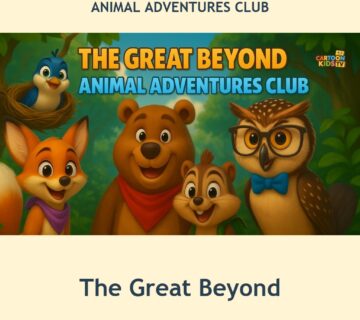
In Animal Adventures Club Episode 2, Benny the Bear, Fiona the Fox, Sammy the Squirrel, and Oliver the Owl hike through the forest to explore nests and burrows. The episode introduces habitats, food chains, plant-animal relationships, and protecting woodlands. Its runtime is 4 minutes 39 seconds.
The activities below extend those topics at home. They are imaginary models, so children can move pieces and test ideas without disturbing a real animal’s home.
A habitat is more than a house
Explain a habitat as the place where an organism finds the conditions and resources it needs. A nest is one feature within a bird’s habitat. Nearby plants may provide food, cover, or places for insects that the bird eats.
Food chains describe feeding relationships. A food web joins several chains because many animals have more than one food source. Shelter connections also matter, but they are different from feeding connections. Giving each kind of link its own label avoids muddling the two ideas.
Activity 1: Build a woodland needs map
Materials: a sheet of paper, crayons, four large paper cards, and a library picture or reliable reference about a familiar woodland animal.
- Choose one animal. Check what it eats and where it shelters, rather than assigning the same needs to every forest creature.
- Label the cards food, water, shelter, and space. Younger children can use a leaf, water drop, hiding place, and open area as symbols.
- Draw an imagined woodland and place each card where its resource might be available. Include routes between resources.
- Ask what happens if a wide road interrupts a route. Move the paper cards to explore a safer arrangement in your model.
- Explain which feature matters to your chosen animal and why. Keep uncertain details on a separate question list.
For ages 3-5, match one animal to food and shelter. Older children can compare two animals and notice where their needs overlap without assuming they use everything identically.
Activity 2: Connect a paper food web
Materials: paper, pencil, and crayons. Draw an oak tree, caterpillar, small insect-eating bird, and a squirrel as an illustrative woodland example, not a list of episode sightings.
- Draw an arrow from oak leaves to the caterpillar, showing food moving to the eater.
- Add an arrow from caterpillar to bird and another from oak acorns to squirrel. Explain each arrow aloud.
- Use dotted lines for shelter connections, such as a tree providing a nesting place. Label them shelter.
- Cover the tree drawing. Ask which feeding and shelter links have disappeared from this small model.
Real woodland webs contain many more connections. Removing a drawing helps children ask about dependencies; it does not predict exactly what every wild animal will do.
Ask like a habitat investigator
- How is a nest different from the whole habitat?
- Which arrow shows feeding and which line shows shelter?
- What can people do to leave woodland homes undisturbed?
Keep exploring
Find more Animal Adventures Club ideas and read our earlier Forest Trail Adventure habitat guide. Use the next walk to observe from a distance and add one detail to your needs map.
Activity 3: Draw the episode idea
Materials and setup
Use paper, crayons, and one safe household object connected to Forest Trail Adventure. Keep the object on the table and let an adult handle any cutting.
How to play
- Draw the starting situation from the story.
- Circle one detail that helps explain the problem or idea.
- Draw a second version after one change.
- Tell a family member what changed and why.
Parent Prompt: Ask, “What detail would you investigate next?”
Learning Connection: Comparing before and after drawings helps children explain evidence and sequence.
Activity 4: Make a family sorting game
Materials and setup
Prepare six large paper cards with pictures or words related to Forest Trail Adventure. Use broad categories that your child can explain.
How to play
- Place the cards face up and invite a first sort.
- Ask your child to name the rule used.
- Change one card or rule and sort again.
- Compare which rule was easier to explain.
Parent Prompt: Ask, “Could another rule also work?”
Learning Connection: Flexible sorting builds classification and clear communication.
Activity 5: Retell, question, and check
Materials and setup
Use three paper panels labelled Before, During, and After. Keep a question card beside them.
How to play
- Retell one episode moment in the first panel.
- Draw what happened next and add one question.
- Look for an answer in the article or an official source linked below.
- Write or dictate what remains uncertain.
Parent Prompt: Ask, “What evidence supports that answer?”
Learning Connection: Retelling and checking sources connect comprehension with early research habits.
Further Reading and Family Links
Explore the Animal Adventures Club collection and continue with more Cartoon Kids TV learning guides. For background information, visit National Geographic Kids and National Park Service science resources.
Frequently Asked Questions
Is an animal’s habitat the same as its nest or burrow?
A nest or burrow is a shelter within a larger habitat. The animal may also need feeding areas, water, and space beyond that shelter.
Which direction should our food-web arrows point?
Point from the food to the organism eating it. A leaf-to-caterpillar arrow shows the direction in which food energy passes through that feeding relationship.
Are the oak, caterpillar, and squirrel shown in the episode?
They are examples for the home paper model. The episode description establishes woodland habitats and feeding relationships without identifying every species shown.
Can we move a real nest to get a better look?
Leave nests and burrows undisturbed. Observe from a distance, stay on appropriate paths, and use pictures or your paper map to investigate animal homes.
What if my child thinks every animal eats leaves?
Compare reliable pictures or facts for two animals with different diets. Add the correct food to each map and explain that animals meet their needs in different ways.
How can older children extend the woodland map?
Ask them to label evidence, identify gaps in their knowledge, and compare feeding links with shelter links. They can research one missing relationship before drawing it.
What can children notice in Forest Trail Adventure?
Invite children to name one detail from the episode before offering an explanation. Their observation can guide a drawing, map, or small home investigation.
How can this episode become a family activity?
Choose one short extension from the guide, keep materials simple, and let children explain what changed or what they still wonder about.
Is the home activity a scene from the cartoon?
No. It is a separate, supervised learning extension inspired by the episode topic. The article identifies when a model simplifies a real process.
Where can parents find reliable follow-up information?
Use the linked official science, education, or cultural institution sources in the Further Reading section and compare information with your child questions.


No comment