
Dancing Daisies: Keep a Flower Visitor and Sunlight Journal
Flowers, visitors, and a garden quiz
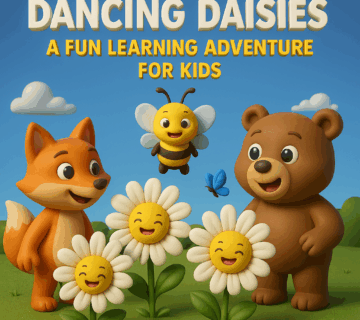
This 2-minute-38-second Magic Garden episode follows Benny the Bear, Fiona the Fox, Sammy the Squirrel, and Oliver the Owl among daisies, buzzing bees, and butterflies. Its description introduces heliotropism, pollination, a garden observation activity, and an interactive pollinator quiz.
The dancing belongs to the animation’s playful world. Real plants can move or grow in response to light, but their responses vary by species, plant part, age, and conditions. Not every daisy will visibly turn to follow the Sun.
Two garden ideas to separate
Pollination happens when pollen reaches the receptive part of a flower, helping many flowering plants reproduce. Bees and butterflies can carry pollen as they visit flowers; they are often seeking nectar or pollen for themselves.
Heliotropism describes movement oriented to the Sun’s changing position. Phototropism commonly describes growth toward light. These ideas are related, but a stem slowly bending toward a window is not the same observation as a flower tracking the Sun through a day.
Home activity: Count visits to one flower patch
Materials: paper, pencil, and a timer. Select flowers visible from a safe path, seat, or window. An adult should choose a comfortable distance, especially for anyone with an insect-sting allergy.
- Draw three columns: bee-like visitor, butterfly, and not sure. Add simple pictures for children who are not reading.
- Watch the same small patch for three minutes. Make a mark whenever a visitor lands, keeping repeated visits in the tally.
- Record the time and weather. Note whether the patch is sunny, shaded, breezy, or still.
- Repeat later if your child is interested. Compare visits without assuming the count equals the number of different insects.
Stay still, avoid blocking insects’ flight paths, and never catch or handle them. A zero is a valid result. It says what happened during that observation period, not that the flowers never receive visitors.
Home activity: Map light around a plant
Materials: paper, crayons, and a familiar plant that can remain in its normal position. Observe from indoors or a safe outdoor spot without looking directly at the Sun.
- Draw the plant and one fixed landmark, such as a window frame or garden pot.
- In the morning, mark which side receives light. Sketch the direction of a visible leaf or flower.
- Return later and draw again from the same viewpoint. Add the time to both pictures.
- Compare light and plant position separately. State what changed, and what you could not detect.
These observations may show moving shadows without visible plant movement. That is useful evidence. Younger children can choose sunny or shaded symbols; older children can repeat the record over several days while keeping the pot in place.
Ask like a garden observer
- Did we count visits or individual insects?
- What else besides sunlight might affect today’s visitors?
- How would we check whether a flower changed direction?
Explore more nature stories in The Magic Garden. For a gentler first gardening session, visit our guide to window garden activities with young children and choose one observation to keep.
Activity 3: Draw the episode idea
Materials and setup
Use paper, crayons, and one safe household object connected to Dancing Daisies. Keep the object on the table and let an adult handle any cutting.
How to play
- Draw the starting situation from the story.
- Circle one detail that helps explain the problem or idea.
- Draw a second version after one change.
- Tell a family member what changed and why.
Parent Prompt: Ask, “What detail would you investigate next?”
Learning Connection: Comparing before and after drawings helps children explain evidence and sequence.
Activity 4: Make a family sorting game
Materials and setup
Prepare six large paper cards with pictures or words related to Dancing Daisies. Use broad categories that your child can explain.
How to play
- Place the cards face up and invite a first sort.
- Ask your child to name the rule used.
- Change one card or rule and sort again.
- Compare which rule was easier to explain.
Parent Prompt: Ask, “Could another rule also work?”
Learning Connection: Flexible sorting builds classification and clear communication.
Activity 5: Retell, question, and check
Materials and setup
Use three paper panels labelled Before, During, and After. Keep a question card beside them.
How to play
- Retell one episode moment in the first panel.
- Draw what happened next and add one question.
- Look for an answer in the article or an official source linked below.
- Write or dictate what remains uncertain.
Parent Prompt: Ask, “What evidence supports that answer?”
Learning Connection: Retelling and checking sources connect comprehension with early research habits.
Further Reading and Family Links
Explore the The Magic Garden collection and continue with more Cartoon Kids TV learning guides. For background information, visit Royal Horticultural Society gardening resources and U.S. Forest Service pollinator resources.
Frequently Asked Questions
Do all daisies follow the Sun?
No. Sun tracking varies among plants and their parts. Enjoy the cartoon’s dancing flowers while checking what the particular plant in front of you actually does.
Do butterflies pollinate every flower they visit?
Not necessarily. Pollen transfer depends on the flower, visitor, and contact involved. A recorded visit does not by itself prove successful pollination.
Are bees the only pollinators?
No. Butterflies, flies, beetles, moths, and some birds and mammals can pollinate plants. Some plants also depend on wind or other means of pollen movement.
Can we do the activity without a garden?
Yes. Observe a planter from a window or use flowers beside a safe public path. If there are no flowers, begin with the plant-and-light journal.
Should we rotate the pot to make the plant move?
Keep it still for this observation so the pictures can be compared. Moving the pot changes the setup and makes interpreting the result more difficult.
What does a day with no insect visits tell us?
Only that no visits were recorded during that session. Time, weather, season, and flower condition can influence activity; repeat before drawing a broader conclusion.
What can children notice in Dancing Daisies?
Invite children to name one detail from the episode before offering an explanation. Their observation can guide a drawing, map, or small home investigation.
How can this episode become a family activity?
Choose one short extension from the guide, keep materials simple, and let children explain what changed or what they still wonder about.
Is the home activity a scene from the cartoon?
No. It is a separate, supervised learning extension inspired by the episode topic. The article identifies when a model simplifies a real process.
Where can parents find reliable follow-up information?
Use the linked official science, education, or cultural institution sources in the Further Reading section and compare information with your child questions.




No comment